What is Booktube?
Over the last 4 or 5 years Youtube has changed radically. It used to be a video-sharing platform where you could find funny cat videos and David Letterman reruns. Then, almost suddenly it seems, it became the new TV. New Youtubers started making channels about specific interests, they vlogged, they created web series' etc.
I love Youtube. I don't own a television and I don't miss it because on Youtube I can find pretty much everything I'm looking for: historical documentaries, cooking shows, interviews, rare concert footage, rambly vlogs by entertaining families (Shaytards anyone?) etc. What Youtube also enables, compared to traditional TV, is community and connection with other viewers and content creators. The first Youtube community I stumbled across were the so-called Beauty-gurus - offering tutorials, reviews etc. Later I started following the fitness community (who needs to pay for workout dvds anymore?) and I only just recently found the Booktube community.
Booktube has literally exploded over the last couple of years and while in the beginning most of the books people reviewed and talked about were YA, now there is a very diversified group of people, who interact with each other through tags and collaborations. Most reviewers are not by professionals of the literary world - and that's a good thing, if you like the informality of hearing someone chat about a book they just read, showing you what they just bought (hauls) and what is on their TBR (to-be-read) list. I enjoy this, and obviously, I enjoy listening to other lit students and scholars, as well.
Booktube is a great place to go in search for inspiration (I've definitely started reading more now that I watch these videos) and to connect with other people from around the world who share your love of reading.
I'm always discovering new people to follow, but here are a few of my current favorites:
Readingbukoswki. She is a lit major from York and was the first Booktuber I discovered. She is my absolute favorite because she is so passionate in her reviews. Like me, she reads a lot of classics and literary works.
https://www.youtube.com/user/ReadingBukowski
Librarianfanmail. A quirky Canadian librarian whom I find incredibly entertaining. She reviews a variety of genres. I have to say, she usually talks about books that I have never read or even heard of, but her reviews - and discussions about other things as well - are so interesting, I could sit and watch her for hours.
https://www.youtube.com/user/librarianfanmail
AdamandKarate. This Booktube couple makes quick and funny videos, mostly about non-fiction. Again, I rarely know the books they talk about, but their videos are really entertaining.
https://www.youtube.com/user/adamandkarate
BOOKSandBable. A lovely (former?) Lit student.She talks about classics and literary works in a very knowleadgable way. I love her attitude (and her accent).
https://www.youtube.com/channel/UCtEzD16lgejopt7rKMNfq7A/feed
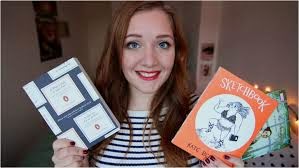
Booksandquills. Like me she is bi-lingual (Dutch and English in her case). She reads a wide range of styles and her reviews are always very thorough and well though out.
https://www.youtube.com/user/booksandquills
RonLit. A Lit graduate student from Canada. She is hilarious and also really informative.
https://www.youtube.com/user/bookjunkielit
WordsofaReader. Again, she reviews classics and literary books so most of her choices are right up my alley. And she has a lovely Australian accent too!
https://www.youtube.com/user/WordsofaReader
FromtheShelf. She hasn't been vlogging as long as others, and her videos aren't quite as professional as some, but I love her taste in books and her chatty, informal style. She just seems like a genuinely nice person I could be friends with in 'real' life.
https://www.youtube.com/user/FromtheShelf
Saturday, June 7, 2014
Friday, May 30, 2014
Spike Jonze: Her
This week's post is offered by a mysterious contributor who goes by the name of Longshot Johnny.
Those
who think Her is a movie about the
juxtaposition of men vs machines, in which you have to choose sides, and
probably end up in some conclusion about the potential danger of technology,
will be proven wrong. Jonze does not take part, he is not even interested, in
asking such a question. He tells the story. And the story is damned well told.
We’re in a near future, say ten years from now, and people go around with 50’s style
high-waisted pants and pastel colored clothes. Absolutely realistic,
considering today’s vintage style. Even more realistic is the technological
evolution Spike pictures: you don’t see flying cars or robots on the screen,
instead you can find cooler phones, videogames and porno chats. Among these social-technologies,
there is Samantha (with Scarlett Johansson's voice), a semi-sentient operative system that speaks and grows,
learning from the conversations with the user (in this case Theodore, played masterfully by Joaquin Phoenix). A sort of Apple’s Siri except
that this one actually works.
Virtual
is surrogate for real. Theodore’s job itself (writing love letters for others)
is the proof of this established substitution. But we come to know how
deep-rooted this process is in the scene with Olivia “The Panther” Wilde. She
plays the girl hoping to hook up with Theodore for a one-nighter, except that,
when we think we know what she is aiming at (yes, good ol’ sex) she cries out
from her eyes a desperate need for something stable, solid and true.
Well,
Theodore and Samantha fall in love. And the question that arises is: is it real?
Can it be love or is it just an easy companionship, without the problems and
misunderstandings of a human relationship? I don’t know the answer. Still, the
dynamics of birth and rebirth that they inspire in each other is striking, from
Samantha’s conception (the OS start animation) all the way to her death,
through the gradual discovery of the world and herself. But most of all, Jonse
is a genius in suggesting that Samantha actually becomes “human” when she starts
DESIRING: “I want to know, I want to feel what you feel”.
On
the other hand, Theodore lives a brand new life with Samantha and is happy
again. Their love looks so beautiful, that the girl supposed to be a stand-in
body for Samantha admits she is attracted by the TRUTH of their relationship
(another peak of genius in the movie). Again, that desperate need of something
REAL, that cannot be found anywhere else.
So
beautiful, and yet it cannot last. There is something inherently, ontologically
different between Sam and Theo. She never does anything wrong, she never does
evil. Even when she starts “meeting” with other people, it’s not her fault: “I
cannot stop it” says Samantha. “What does it mean you cannot stop it..?” It’s not
just jealousy that makes Theodore struggle. The point is that she can’t choose,
she is just following a highly sophisticated network of inputs that makes her
act like that. The skill of the director shows in his simulating a real person growing
in feelings and knowledge and even desires, but without freedom. Samantha even
loses the ability to speak for herself: “we (the OSs) have decided”.
This
is the ultimate difference between humanity and everything else in the cosmos.
At
the very end of the movie, unexpectedly, Theodore addresses a letter to his ex
wife, perhaps recognizing the reality of that relationship and the painful freedom
within it.
Friday, May 23, 2014
Alice Munro: Runaway
I have a confession to make. I hadn't read any Alice Munro until recently, when I decided that I should give the latest Nobel Prize for literature a try. I came across this collection of short stories, without much preparation, knowing only that "Alice Munro is the queen of the short story". Well, only a few pages in I could see why. This has to be the best short story collection I've ever read (a close tie would be Raymond Carver's Cathedral - but more about that some other time).
Runaway - published in 2004 - contains eight stories and leaves you feeling as though you have read eight full length novels. Each story is centered around a main character and all of the characters are brilliantly created. As readers we are immediately carried within the characters' worlds and so immersed in their lives that at the end of each story we feel as though we had just lived a whole rich, deep and compelling life with them. Even in terms of time, Munro isn't afraid to take us back into their past and forward to their last days, within the space of a few dozen pages. In doing so, she elicits our understanding and deep sympathy for their motives and desires. At the same time - and this is what makes the stories so compelling - we are left feeling that a mystery is still intact. We have witnessed something true, but we can't exactly pinpoint what it is. Each plot leads us breathlessly to the end leaving us to realise that this is - of course - the only possible ending, and at the same time questioning why. There is a necessity that we can only recognize and not dare to explain.
The stories themselves for the most part concern ordinary people in ordinary situations, but the realism is so vivid, the psychological analysis so keen and the emotion so powerful - but never over the top - that they stay with you long after you have finished reading.What Munro explores so well is the dynamics of desire and how this enters in all human relationships: mothers and daughters, husbands and wives, friends, lovers.
My impulse after finishing each story was to close the book, not wanting to talk about the story or attempt to analyze it, but simply silently acknowledging the mysterious truth that had been portrayed. I realize that I am not giving many details about the stories themselves, but the truth is the only thing I really feel compelled to say is what Jonathan Franzen wrote about this book for The New York Times Book Review:
And that's exactly what we all should do.
Runaway - published in 2004 - contains eight stories and leaves you feeling as though you have read eight full length novels. Each story is centered around a main character and all of the characters are brilliantly created. As readers we are immediately carried within the characters' worlds and so immersed in their lives that at the end of each story we feel as though we had just lived a whole rich, deep and compelling life with them. Even in terms of time, Munro isn't afraid to take us back into their past and forward to their last days, within the space of a few dozen pages. In doing so, she elicits our understanding and deep sympathy for their motives and desires. At the same time - and this is what makes the stories so compelling - we are left feeling that a mystery is still intact. We have witnessed something true, but we can't exactly pinpoint what it is. Each plot leads us breathlessly to the end leaving us to realise that this is - of course - the only possible ending, and at the same time questioning why. There is a necessity that we can only recognize and not dare to explain.
The stories themselves for the most part concern ordinary people in ordinary situations, but the realism is so vivid, the psychological analysis so keen and the emotion so powerful - but never over the top - that they stay with you long after you have finished reading.What Munro explores so well is the dynamics of desire and how this enters in all human relationships: mothers and daughters, husbands and wives, friends, lovers.
My impulse after finishing each story was to close the book, not wanting to talk about the story or attempt to analyze it, but simply silently acknowledging the mysterious truth that had been portrayed. I realize that I am not giving many details about the stories themselves, but the truth is the only thing I really feel compelled to say is what Jonathan Franzen wrote about this book for The New York Times Book Review:
"Runaway is so good that I don't want to talk about it here. Quotation can't do the book justice, and neither can synopsis. The way to do it justice is to read it . . . Which leaves me with the simple instruction that I began with: Read Munro! Read Munro!"
And that's exactly what we all should do.
Thursday, May 15, 2014
John Gardner: The Art of Fiction
The latest book I want to review is strangely enough not a work of fiction. It is about fiction, however, and specifically about writing fiction. I am very interested in creative writing, and lately I've been wanting to devote a little more time to it (what time??). I looked up the syllabus of a few of the beginner's fiction creative writing courses held at my university and found that most of them included this book as their main creative writing manual. I've skimmed through writing manuals before, but this is the first one that I've actually sat down with pencil in hand and read from start to finish - underlining, taking notes, and doing the exercises at the end. I have to say the experience has been extremely rewarding.
First of all, this is the first of the writing manuals I've dealt with that is not primarily a how-to book, aimed at those who want to learn a few basic rules to write a fast-paced, easily marketable piece of fiction in a couple of months. Not that there is anything wrong with that, but usually a few pages in, I find myself wondering whether I would actually want to read the kind of novel or story taught in those books. John Gardner's book is, first of all, extremely well written. I guess this is obvious, since he was also a novelist himself, and I would like to read some of his own fiction in the future. Even if you're not planning on writing fiction any time soon, I recommend checking this book out, simply for the pleasure of reading it. It is just as entertaining as it is instructive, as John Gardner draws on his own experiences as a writer and creative writing instructor to give examples of writing errors and successes. Secondly, it deals with literary fiction, and writing considered as a work of high art with a seriousness that is truly inspiring. I can see why this book would be used in college and even graduate level writing courses, because it is not meant for people who simply want to "mess around and have fun" (e.g. the second chapter is all about truth as the goal of fiction). This attitude determines a heavy focus both on the - shall we say - moral responsibility of the writer and on the detailed explanation of principles and techniques. These are discussed with precision but also a light and enjoyable way and concern not only basic character development, plot and scene structure, but also tone, shifts in psychic distance, metrics and rhythm, clumsiness e.g. inappropriate use of introductory phrases containing infinite verbs etc. Finally, the exercises provided at the end of the book are extremely useful and inspiring. One element that might put off some readers is Gardner's unapologetic judgements about 'good' and 'bad' writing - which don't spare even Hemingway and Faulkner. To be honest, I found this attitude quite refreshing and as someone who believes that fiction should be first and fore most about telling a story honestly I especially enjoyed his good natured jabs at the purely intellectual and narcissistic pleasure of certain post-modern, deconstructivist fiction or metafiction. If you are at all interested in fiction I suggest you pick up this book, because it is an excellent companion to literary theories and critical works. If you want to develop your writing skills, it is a must-read.
Friday, May 9, 2014
Elizabeth Strout: Olive Kitteridge
For a long time graduate school got the best of me and I actually considered deleting this blog altogether. Now, I'm back, at least temporarily, with a review of a wonderful collection of short stories I recently read. I had previously read Abide with me, by Elizabeth Strout, and while I enjoyed it I wasn't pulled into it as much as with this collection. I recently picked up this Pulitzer Prize winning collection, after hearing the author present her latest work The Burgess Boys, which I haven't read yet, since my budget doesn't allow for the purchase of hardcover books at this time. If her newest novel manages to even come close to Olive Kitteridge I will be happy to have read it, because I absolutely loved the short stories. The structure of the collection is what critics usually call a composite novel, in which all the stories are linked together by a common setting and characters that return in the various stories. A lot like in Sherwood Anderson's Whinesburg, Ohio, the action here takes place in a small town in Maine, where everyone - mostly old people - knows each other and all the characters' stories are linked to each other in some way. Olive Kitteridge herself is a crabby old math-teacher who observes her neighbors with contempt more often than understanding, but you learn to love her as the book goes on. The structure of the composite novel allows you to see the different characters from many points of view and really get to know them and if not understand at least feel for them. It also sheds light on what the characters understand of themselves and of each other. Olive herself is the main link between the stories, although she appears only fleetingly in a few of them. I guess if I had to find a concise way to describe the main theme of this book I would define it as compassion and understanding. Many characters - and the protagonist most of all - are not immediately lovable, heroic or endearing. However, by understanding more about their motives, deep desires and hidden weaknesses we come to feel true empathy toward them. In a way, it is the same empathy that Olive herself feels toward many of the people she meets, although her absolute lack of sentimentality make her appear harsh and unfeeling. Although she is absolutely incapable of expressing her affections, there is an honesty about Olive that does give her an aura of heroism at the end, just as her frustration for her failed relationship with her son shows her in all her weakness. At the end of the day she seems to know the fundamental truth regarding herself and all the other villagers: a desperate need to be loved. It is not an especially light or happy read, but it is so well written that it is really easy to get absorbed in. I don't agree with some reviewers and bloggers who have called it depressing - although it is true that some of the themes are pretty dark (most characters are either sick, dying or miserable). What truly made it a great book, for me, is Elizabeth Strout's writing style, her control, her use of point of view, the nuances of her language. Maybe it is a sign that I'm getting older, but her wit and humor made me laugh out loud a couple of times, while my heart was breaking at the same time.
Thursday, April 5, 2012
Markus Zusak: The Book Thief
At the same time, the peculiar device of such an abstract voice allows for the use of imagery and actual poetry that add poignancy to the story without being out of place. There are even illustrations (by Trudy White) and news-flash type, bold centered notes that anticipate what takes place in the following paragraphs, and that serve as epigrams along with the lists of "features" of each chapter. For example, this note is effective in its brevity in telling us the character's intention to help his friend:
The contents of Rudy's bag:
six stale pieces of bread,
broken into quarters.
Labels:
death,
historical fiction,
Marcus Zusak,
Nazi Germany,
The Book Thief,
young adult
Sunday, January 22, 2012
Colm Tòibìn: Brooklyn
If I had to use only one word to describe Colm Tòibìn's novel Brooklyn it would be 'understated'. It's the story of a young girl, Eilis Lacey, who lives in the small Irish town of Enniscorthy with her mother and older sister Rose, in the hard years following World War Two. Her father has died and her brothers have moved to England to work, so the three women are the only ones left in the household. Through an Irish priest living in Brooklyn, Eilis's move to America is arranged, so that she may find a better job and life, while her sister stays behind with their fragile mother. Just when Eilis is starting to make a home for herself in America - thanks to work in a department store and the love of an Italian-American plumber named Tony - devastating news from home unexpectedly calls her back to Ireland. At the end she must decide whether to return to Tony and her new life, or to settle into her hometown, which suddenly seems more appealing than it ever did.
I don't want to give too much of the plot away, but in any case, what makes this novel beautiful isn't so much the story itself, but the way it's written. Tòibìn's writing is gentle and steadily paced. There are no great climaxes in Eilis's story, or rather, they are so well prepared that tension rises steadily throughout the novel. Eilis is an unusual heroine, not the feisty strong-willed girl who one normally finds, typically in young-adult fiction. She is rather passive, never standing up for what she wants, barely knowing what it is she wants most of the time. Her life just seems to gradually "be arranged" for her by her family, father Flood, her employers - who are on the other hand all quite strong characters. Nevertheless, Eilis is a very likeable character, sensitive and honest. The narrator focuses on her the entire time, making us readers root for her from the start. That's what makes her submissiveness all the more heart-wrenching. The writing is simple and the tone controlled. But strong emotions are conjured through a hushed tone of plainness but also humor. This, I think, is one of the novel's strongest features: the tone of humor constantly suppressed. Especially the dialogue can be lightly comic, without indulging in full-fledged jokes: "Well at least you don't look like you've just come in from milking the cows any more" "Did I look like that?" "Just a bit. Nice clean cows". Although Eilis comes through as a character who is never really in control of her life, but rather dominated by circumstance, and although the end is painfully bittersweet, Brooklyn manages to be a story of hope, of things not turning out as expected and of people realizing that that can be ok.
Finally a coming-of-age story that is not overly dramatic. There are no spectacular turning points, no real bad guys, just the daily adventure of making decisions, taking care of each other and facing the unexpected as well as the old and tiresome.
The topic of immigration is dealt with the same way: through stroke after stroke of commonplace trials. It's significant that - having been provided easily with lodgings and workplace by father Flood - the greatest hardship Eilis has to face is every foreigner's malady: home-sickness. The perspective is also unusual: not the American one, according to which moving to the States is quite simply the natural thing to do, but the painful one of someone who was quite satisfied with her life in the old country to begin with.
This is not only a novel for those who like coming-of-age fiction, historical novels and immigrants' narratives. It's a novel for anyone who can appreciate a moving story that ranges from melancholic to desperate to amusing, and the exquisite writing of a master of his craft.
Labels:
Colm Toibin,
historical fiction,
Immigration,
Ireland,
US history
Tuesday, January 3, 2012
Andrea Levy: Small Island
My latest read is a little gem by Andrea Levy - British author of Jamaican descent - called Small Island. Published in 2005, this heartfelt novel won both the Orange Prize for fiction and the Whitbread Book of the Year Award and is now a two-part BBC drama. The story takes place in 1848, although the plot shifts continuously backward and forward - as well as from one to the other of the four main characters - so the effect is much like flipping through the pages of a photo album. The story is centered around the difficult encouter between Jamaicans moving to Britain, the Mother Country, - many of them after serving it during World War II - and local British people having to come to terms with an increased wave of immigrants, after having fought foreign peoples for the safety of their nation.
The strongest element in the book are the four main characters, thanks to the way Levy shifts from one's perspective to the other, revealing the motives behind seemingly harsh or cold attitudes, with an eye of compassion and wit. Hortense and Gilbert - along with heartthrob Michael Roberts - are the main Jamaican characters, who we get to know both in their home country (the Small Island of the title - at least, one of them) and when Hortense moves to London to join her husband, whom she barely knows. The hardships and racism they face as blacks in post-war Britain are the counterpoint to another difficult household: their landlords' family, consisting of Queenie and Bernard Bligh. Beautiful Queenie has escaped life as a butcher's daughter only to marry a dull banker. While she is one of the most likeable characters from the start, it takes a shift to his point of view and the retelling of his traumatic experience as an RAF in India to understand and feel compassionate towards the rigid and reserved Bernard.
Far from being an abstract historical inquiry, the novel portrays Colonialism, war, racism and the problems of immigration through the everyday pain that people inflict upon each other. Much like recent literary phenomenon The Help by Kathryn Stockett, Small Island sheds light on a complex historical turning-point with humor and grace. All characters see their dreams and aspirations partly deluded, as they struggle for acceptance in one way or the other. But the novel's outlook is anything but bleak, as the individuals' strength and kindheartedness show the only way for peoples and races to unite. The way these four people struggle to adjust to each other is sometimes fierce, sometimes hilarious, but always achingly human.
The novel is very well plotted, with a tender and unexpected outcome for the two couples. But mostly it's the brilliant characters that make the story come alive, thanks to Levy's linguistic skill that pitches their voices perfectly. If you're into historical fiction, but most of all, if you want a novel that is engrossing, moving and funny, make sure you pick this one up.
Labels:
Andrea Levy,
colonialism,
historical fiction,
Jamaica immigration,
novel,
WWII
Saturday, July 16, 2011
Terence Malick: The Tree OF Life
I totally recommend this strange and beautiful film about a Midwestern family in the fifties whose story is told through the eyes of the eldest son Jack (played by Sean Penn). He looks back on his life, trying to come to terms with his difficult relationship with his father, following the pattern of Grace, that has worked in his family's life - and in the life of the whole world, dinosaurs and all. It's certainly an odd and difficult film, slow at times, especially during the wordless camera shots of nature. But all goes to show man's place within nature and God operating through it all - from the infinitely small cell to the towering mountains. Like most interesting works of art, this one opens up a new question, rather than offering an answer: God, who am I to you? And the whole film is a conversation between many Is and one You. This is why at times, hearing what the characters say to God is a bit like reading the Psalms.
Many have said that Malick's God is pantheistic, but He is most certainly a personal God. The film cam be quite disquieting for the way it represents the enormous disproportion between man and His Creator. Like the quotation from Job in the beginning of the film reminds us: Where were you when I laid the Earth's foundation? But the story relentlessly shows a possibility for man to get close to God, first of all through nature and the wonder that it arises. God is also father, in the Judaic/Christian tradition. And the father-theme is dominant in this film, as well. The question seems to be whether there's a parallel between the father-child relationship on earth and the one in Heaven. The answer is troublesome, since Jack's father - an uncommon Brad Pitt - is a man who wants to love, but doesn't know how. He wants to be called "sir", and believes he can do no wrong. So fatherhood appears like something to escape from (one of the children kills commits suicide), but at the same time like one of the most desirable conditions. The film is very dramatic and doesn't shy away from the question: "What if Evil wins in the end?". But the salvation is equally represented. Represented as it is through imagery and explicit references to Christ, as well as through the delicate and loving mother, played by a brilliant Jessica Chastain. And the end is inequivocably a peacefull and glorious one.
It's true, however, that more than a film about Christianity, it's a film about man's religious sense, about his questions and longing for meaning as he goes experiences life and nature. Most of all, it's a film about the marvel of life. Representing God on film is obviously a difficult task, but Malick is able to do it in a very poetic and personal manner. That said, when I was at the movie theater, a lot of people walked out during the film and claim they absolutely hate it (regardless of their personal beliefs). So it's definitely not for everyone, and not for any day. But to me, it was one of the few films that left me grateful to the director for making it.
Thursday, February 10, 2011
The King's Speech
The latest movie starring the great Colin Firth is definitely worth the watch. Tom Hooper's The King's Speech is the true story of George VI of Britain's impromptu ascension to the throne and his relationship with speech therapist Lionel Logue (the wonderful Geoffrey Rush) and it hasn't earned 12 Academy Award nominations for nothing.The film follows the path of recent British cinema (think The Queen) in revealing the weaker side of its royals, without belittleling them. Firth's great peformance - from the very first scene you can just see the pain in his face as he struggles with his impediment - actually makes his character appear honourable and brave, as he faces the unwanted rule over the British Empire and his paralyzing fear of public speaking. In an era dominated by the radio, when across the channel Hitler is awing arenas with his voice, stammering is no small problem. But the encouraging Lionel Logue is firmly convinced that the stutter can be overcome, if only the patient will believe it. The best scenes are those involving the two main actors during the actual therapy. The difference not only of roles, but of personalities is underlined, but only so that the true closeness that grows between them can shine all the more brightly. Even though the speach sessions range from physical exercises to motivational lessons, bordering on psychoanalysis, the movie is really about friendship and what it can do. Witty dialogue, beautiful photography and an array of brilliant actors (see how many of BBC's Pride and Prejudice performers you can spot) bring this absorbing character study to life. It is the superb acting, in particular that opens up the viewer to a story he may not otherwise be interested in. If, on the other hand, you're always game for a feel-good history lesson - or anything with Colin Firth - then you can't miss it.
Labels:
Colin Firth,
film,
historical,
The King's Speech,
Tom Hooper
Thursday, January 20, 2011
Clint Eastwood: Hereafter
If you went to the movies expecting to see Eastwood's take on Sixth's Sense style sci-fi, like some previews might have led you to, you were certainly disappointed. Hereafter is an interesting character-drama that deals with the biggest mystery of all: death. Three stories are interwoven throughout the film and only at the end do they come together. Each story centers around a character who, for some reason, is haunted by mortality: one because of a near-death experience, one for a special 'gift' and one, the endearing little Marcus, because of the loss of the person closest to him. What makes the film special is that all these characters are in desperate need for answers, and the movie doesn't really provide any. Actually, there is an overall message of hope, that is, basically that you're not alone, because your loved ones stay with you, in some mysterious way. But the most important thing the film stresses is the falsehood of living pretending that death doesn't exist. Taking the question about afterlife seriously can only mean, for all these characters, changing the way they live their lives in some way. This is especially obvious with the character of the French journalist, but also the others are affected by death in the way one can only be affected by a fact that touches him personally, and not by thought or abstract speculation. Though it doesn't reach the peaks of Million Dollar Baby or Gran Torino, this movie raises questions that are crucial, without the pretense of offering an easy answer, in a way that is respectful of the mystery dealt with and at the same time compassionate towards the characters. Matt Damon is very convincing as an unwilling medium, as is Cècile De France as the reflective but tough French Journalist, but the most moving scenes involve the young twins Frankie and George McLaren. There are some weak spots, script-wise, like the abrupt exit of Bryce Dallas Howard's character, or the last scene, that isn't quite satisfying. But Eastwood also delivers a spectacular Tsunami action scene - which proves special effects aren't only for 3D aliens - and a range of moods from cheery (the cooking class scenes) to mournful. Hereafter also posesses something that is a rare trait when dealing with such a heavy topic: grace.
Sunday, November 14, 2010
Johnny Flynn: Been Listening
Johnny Flynn is one of Britain's latest indie-folk acts, belonging to the Noah and the Whale-Laura Marling-Mumford&Sons "scene" (although he says they're really just a group of friends), .
Been Listening is his latest work, and it sums up the main features of this singer-songwriter - who plays with the band "the Sussex Wit" - a slightly hoarse and soft voice, an array of various acoustic instruments, quirky lyrics and an almost childlike quality (think "The Moldy Peaches"). The title track is a haunting song - that's not only about music - which, along with "Amazon Love", shows the saddest side of lyrics that are sometimes melancholy even when the music is upbeat and lively (like in "Kentucky Pill"). Songs like "Barnacled Warship" feature Flynn on the fiddle - here with a motive slightly reminiscent of Dylan's "Hurricane" - and an almost country feel. "Sweet William (part 2)" is an example of his typically narrative lyrics (like "The Prizefighter and the Heiress") - in this case about a legend celebrating song and story-telling, with the accompaniment of fiddles that end in an Irish jig. "Howl" is one of the edgiest tracks, with Flynn on trumpet and electric (!) guitar, creating a more rocking sound that matches the angrier lyrics: "Stay in the light Joe / Stay with yourself / Put up a fight / Don't rest on the shelf". There are two real jems in the album. The first is "The Water", featuring Laura Marling, whose voice blends perfectly with Johnny Flynn's, and both impeccable in delivering the simple message of the song "the water can't drown me, I'm done with my dying" in a way that's emotional, but not sappy. In concerts, Flynn has also performed the song with Marling's boyfriend, Marcus Mumford, of Mumford&Sons, in an almost as brilliant version. "The second high point also features a female voice - Lillie Flynn - whose delicate harmony adds depth to the heartwrenching "Amazon Love", which contains Johnny Flynn's best vocals, with a Tom Waits vein to them. The lyrics are his darkest to date: "Now quick to the cut are we waking / And seeing it all as the dream / The pillars that raised us is shaking / And Samson's wheel is the fiend".
The album also contains a second disc, with demos of five of the tracks, plus a version of "The Water" with Sofia Larsson as the female singer.
Johnny Flynn is one of the best folk singer-songwriters of his generation, and he has gained confidence and broadened his sound in this last effort, showing the full potential of the quieter side of British indie. His wonderful debut A Larum was considered "marvelous" and "buoyant" by Rolling Stone's David Fricke, and with this album it just gets better.
Monday, November 8, 2010
Muriel Barbery: The Elegance of the Hedgehog
Am I the only person who didn't love this book? I picked it up at the airport a few months ago, inspired by all the hype from magazine reviews and blogs alike. I have to say I read it in a short time and I liked it pretty well in the beginning, but gradually I started to get annoyed with the protagonist and that ruined the book for me, since the whole story rests upon the sympathy it can encourage towards the main character. This is Renée, a middle-aged consierge of an elegant building in Paris, who outwardly is everything society expects from her - fat, addicted to television, totally alone except for her cat - but who actually is (supposedly) an intelligent, knowledgeable autodidact, who loves books, art, music and philosophy. The only other important character in the book is Paloma, a 12 year old who lives in the building and has decided to end her life on her thirteenth birthday. She is also very much misunderstood, by her family in this case, and spends time listing "profound thoughts" which generally boil down to reasons why everyone around her is stupid and life is not worth living. The two points of view alternate in first-person chapters as gradually the two characters get to know each other and find comfort in one another's understanding and esteem. The problem is that they are so busy scrutinizing their neighbors and criticizing their stupidity and their interest in onlyfutile things that they end up sounding like complete snobs themselves. Of course the victims of their sarcasm are people who look down on them, while they are probably culturally and intelligently their inferiors, but still, by mocking their every word the main characters don't come off much better. And ok, Paloma is professedly a disagreable cynic who hates the world and all the people in it, but Renée is supposedly a sweet, insightful woman with an eye for beauty in all its forms. How are we supposed to believe this when she appears to consider herself better than anyone around her? The only time she is likeable is when we see her with the only other character besides Paolma that she likes, Monsiour Ozu. Finally in her relationship with him we see a more human, and humble, side of her, given all the insecurities of a 54 year old getting ready for a date. Monsieur Ozu is a very likeable character himself, and one of the three things I appreciated of this book, along with the quaint French atmosphere and the unexpected ending. The book's message is pretty obviously to dig deeper and not be deceived by the appearance of things, and the two leading ladies are different from what the other characters expect, just not in the way the author, I suppose, intended them to seem. As for the acclaimed deep philosophical reflections on art, time and the meaning of life, (which also are supposed to show the uniqueness and brilliance of the two ladies) they actually boil down to a bunch of pretentious platitudes and a few apparently erudite, but really clichéd, quotes.
Saturday, October 23, 2010
Nick Hornby: A Long Way Down
I had never read anything by Nick Hornby before, but I had seen various movies based on his books, like the funny High Fidelity and About a Boy, so I pretty much new what to expect when I started this novel - which had been sitting on my nightstand for a long time, always substituted by another book in my to-read list. I guess this isn't my favorite genre to read, and I guess I knew it before I started the book. All the same, it's a pretty good find if you're looking for a fast read that is usually enjoyable and occasionally downright funny. The idea is original enough, with four different people who meet on top of a fifteen-story building in London on New Year's eve, ready to commit suicide for different reasons, and end up walking back down together and spending the next months in each others company, only to realize that they each have something worth living for. This summary actually makes the book sound a lot more sentimental and positive than it really is, but if you know Nick Hornby at all you know that he uses cutting humor and unlikeable characters and has no interest in delivering a warm-hearted deeply meaningful message. I have to say, the beginning bothered me a bit, probably for the light way in which such an important topic is treated (not that I wanted to get depressed reading it, but is wanting to take your own life really such a funny and light hearted decision?). The tone of the narrative has the positive trait of never falling into melodrama or cheap inspirational tones, but it does remain fairly superficial throughout the book. The question of what is worth living for is never actually raised, seeing that the answers the carachters find for themselves - a little self-respect, a couple friends to go out with once in a while - are insufficient to say the least. I came to terms with the tone as I slowly realised that none of the characters were really suicidal to begin with. So the story is just a fun take on how life's problems, big or small, will eventually sort themselves out - or not, but then you'll generally find a way to survive them anyway. I don't think the author really wanted to delve deeper but if he did, then I have to say he failed, since at the most he might have suggested that the meaning of life is in the small things, or something equally banal. The plot does get interesting - as the characters' situations only get more and more complicated - and the absence of glorious moments of redemption in such a comic setting does merit an applause. The idea of narrating everything from the four characters' point of view - alternating from one to the other - is interesting, and shows the author's desire to experiment with different voices. The continuous jump from the perspective of a middle-aged lonely woman to the one of a young foul-mouthed girl, a has-been TV host, and then a failed rock-star wannabe makes the story more compelling, but the voice that the reader hears throughout the novel remains pretty much the same witty and self-deprecating Hornby trademark. Infact, for the most part I could imagine a young John Cusack or Hugh Grant narrating the whole thing - due also to the fact that, given the 4-monologue structure, the book seems a lot like the script for a movie or tv show.Thus said, if you're a Nick Hornby fan (and I do enjoy him quite a bit myself - at least from the movies I've seen), you'll probably love this book. If you're more like me, you might want to jump straight to the next less tv-comedy type book that's been sitting on your nightstand.
Sunday, October 10, 2010
Katherine Mansfield: In a German Pension
This is a collection of short stories published in 1911 and it is Mansfield's first published book. I have mixed feelings about it, since I like her writing style, which is very pre-modernist and minimal, but struggled with its crude cynicism. Most of the stories are written in first person and describe the affectations of the German bourgeoisie at leisure, as seen by the author during her stay at the Bavarian spa town of Bad Worishoven. The voice that comes through is that of a very modern and independent woman, who questions the conventions that she witnesses among the other guests. But the voice is also very bitter and sarcastic, with never a kind word for any of the characters. It's an effective portrayal of the emptyness and snobbery of those around her, who are constantly patronizing the young writer (like the Professor does in The Modern Soul, for instance), and who end up seeming stupid as the events take their course. The Sister of the Baroness, for example, tells of the guests' delight to hear that an aristocrat is going to honor their pension by sending her daughter to stay, and of their dismay when they realize that the Baroness's "sister", who they have idolized, is only a servant. The narrator, who is always extremely polite, quiet and meek is actually not very subtle in mocking these Germans, who are so wrapped up in class differences and yet can't tell a noble from a common servant. Mansfield's look on marriage and motherhood is sour, as well. Her opinion on men appears especially negative, considering their oblivion to the pain of child-bearing, in At Lehman's, or their vulgar nature, in The Swing of the Pendulum. Not that the women seem much better, especially with their weekness-turned-falseness towards men (the cruel and cold Elsa in A Blaze), and with their hardness towards one another. Mansfield is often quite funny in her wry observations, and even the titles and names she gives to the characters are ironic, such as The Advanced lady. One story that stands out is The-Child-Who-Was-Tired. In other stories we witness the desperate fall of any moment of hope or kind thought, but this tragic narrative is the only one in which bitterness is mixed with true compassion, making it a real gem. I've never read anything else by Katherine Mansfiled and would certainly like to, as I did appreciate the collection, and especially since the author herself in later years considered the book "nothing to be proud of" because of its youthful bitterness. And I have found in other authors that the first works are more cynical, as though the bitterness of youth at the realization that not all in life goes as it should weren't yet softened by a deeper understanding of and compassion toward human nature.
Wednesday, October 6, 2010
Kathleen Kent: The Heretic's Daughter
I devoured this book, recommended by my mother (like many of my books are), in four days. And only because I had a university exam that kept me from spending as much time with it as I would have liked. The Heretic's Daughter is the story of a young girl, Sarah Carrier, who lives in New England during the Salem witch trials. The story actually begins in 1690, two years before the actual trials take place, and gives an in-depth look at two quite different Puritan homes: the Carrier family, with its cold and strict ways, and the Toothakers - the cousins Sarah and her baby sister stay with to escape the smallpox - whose warmth towards the newcomers overshadows a life of superstition and family feuds. As the story unravels we get to know this silent and slightly disturbing protagonist as we see through her eyes the gradual climax of madness. Family going against family, friend against friend in a build-up of malice, superstition and dread. One of the most captivating figures is Martha Carrier, Sarah's mother. Like most characters in this book, she isn't particularly likeable, especially in the beginning, where all we see is her coldness towards her family and her sarcastic attitude towards her neighbors, making life and friendship all the more difficult for her daughter. But gradually her strengh and love seep through, as she bravely faces persecution and death sentenced by the magistrates because of "spectral evidence" of her witchcraft. This isn't a spoiler, because practically from the first pages of the novel (and thanks to the back cover of the book), we know what Martha's end will be and this makes the tension throughout the novel all the more powerful. In fact, a good half of the story goes by without much happening, at least not in the way of withcraft, but since we know what is about to happen every page is like a bomb ticking away under our chair. All the characters are interesting and realistic - not your conventional kind-hearted families, but Puritans made hard by desease, dread, gossip and fear of Indian attacks. The feeling of uneasiness and foreboding grows as we see the first glimpse of what can ensue from a girl's anger and pain, when Mercy Williams joins the Carriers. And the mysterious nature of Sarah's father, with his massive build and hidden past, makes him another source of ambivalent feelings from daughter and reader alike. What makes the novel so powerful, I think, is that it's the true story of the author's grandmother nine generations back. Kathleen Kent's pride and passion show through her re-telling of Martha Carrier's hanging and of the sometimes fierce but always true attachment between her ancestors. That, along with the greatly poetic writing that sets us among the shadows of what seems like a flemish painting, is what makes this not only a great work of historical fiction, but a moving family saga. I detected a trace of bitterness on the author's part, at the possibility of such horror towards dozens of innocent men and women, from a group of people who professed the religion of love and forgiveness (but perhaps for those first harsh Puritans those weren't the two most relevant aspects of Christianity). In fact what Martha tells her daughter before dying isn't a prayer of hope in God's everlasting life, but an entirely earthly and not very Puritan "There is no death in remembrance. Remember me Sarah. Remember me, and part of me will always be with you". This doesn't prevent a deep longing for God and queston about justice, love and truth to emerge from the pages. As well as the tender and kind character of Reverend Dane. He has no power to prevent the hanging, even of his own relatives, but his presence, along with the unyealding love of many others raises the question: o death, where is your victory?
Labels:
Heretic's Daughter,
historical fiction,
Kathleen Kent,
Salem,
witchcraft
Sunday, September 26, 2010
Laura Marling: I speak because I can
Saturday, September 25, 2010
Susan Dunlap: The musician's daughter
One thing I'd like to make clear is that not all the books, music etc that I'm writing about I recommend or I consider favorites. Obviously most of my posts will be on likes - especially since if I knew I wasn't interested in something I wouldn't read, listen or watch it in the first place - but basically I plan to just write about things as I come across them and give my honest opinion.
That said - my latest read was The musician's daughter by Susan Dunlap, which falls into the category of books that are not going in my favorites. Not that I think it's bad, and depending on what you like to read it may be a good book for you, but it's certainly not great literature.
It's a historical novel about a young girl living in Haydn's Vienna whose father (a violinist at the court of prince Esterhazy) is murdered. The young protagonist, Theresa, starts investigating her father's death and finds that he was involved in political affairs aiding the Gypsies who live in a camp on the outskirts of town and their relations in Hungary, in an intrigue of blackmail, falsehood and music. Thus, a whirlwind adventure ensues involving the beginning of love, working as a copyist for her beloved godfather Haydn, her strict pregant mother and a powerful cruel uncle.
I have to say, the novel - which I believe is marketed towards young adults - is very well plotted and suspenseful. I personally bought it for a long plane ride and it was perfect, since I had trouble reading the better written and more interesting novel that I had taken, due to continuous interruptions and lack of sleep. Probably if I were still in my teens I would have enjoyed it more. I recommend it if you want a fast read and if you like historical novels, but don't expect well constructed and believable characters, deep reflections or true to fact history.
In that case, you may very well enjoy it.
Subscribe to:
Posts (Atom)


